
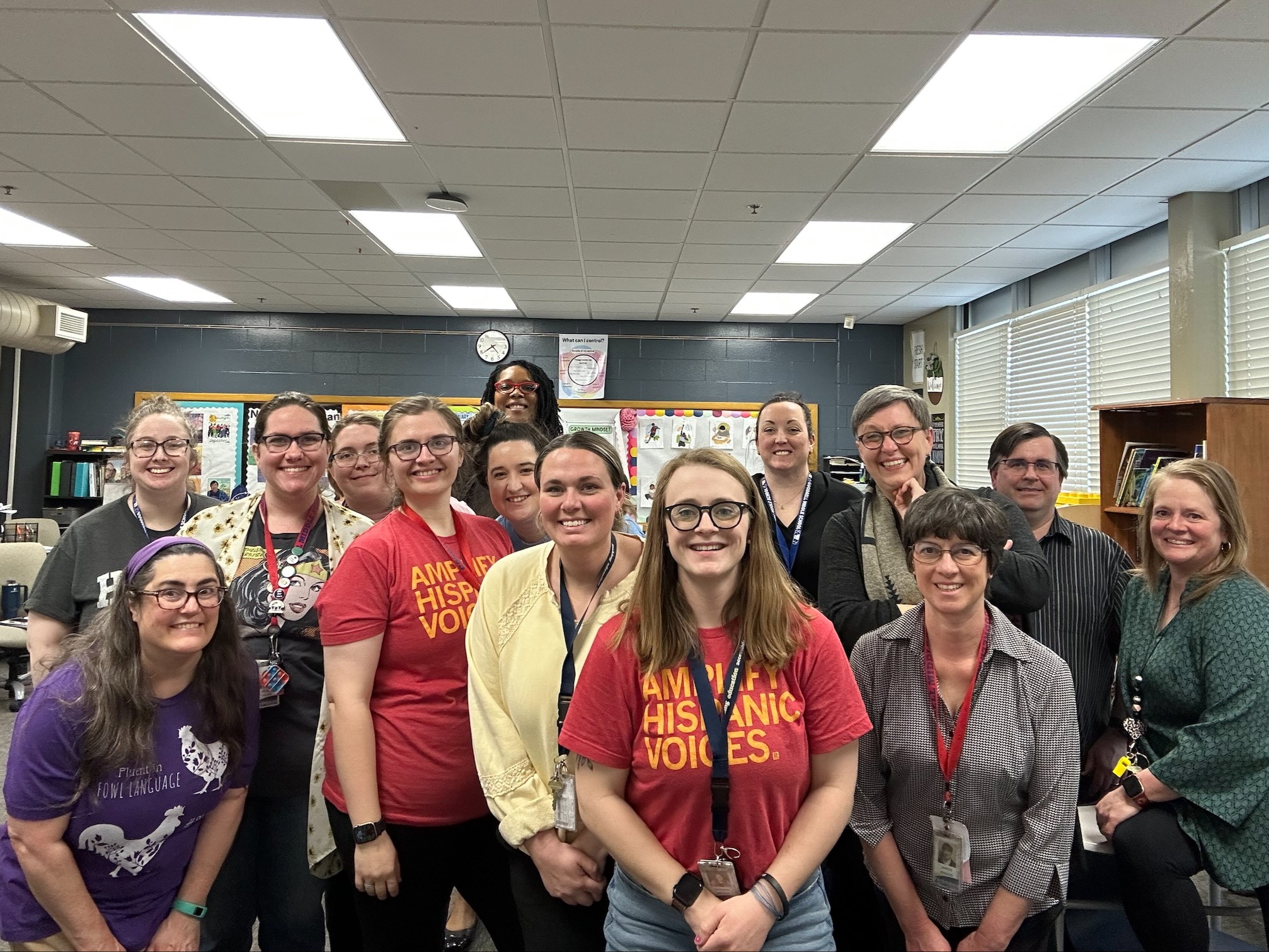
Iowa Study Group Members
Seventeen middle school educators and a school psychologist in Iowa formed a Teaching for Black Lives study group in 2024 and they continue to meet monthly in-person. Haileigh Mejia, special education teacher and group coordinator, said,
At the very beginning of our book study we read Donovan Livingston’s poem, “Lift Off.” A lot of the group members highlighted the line: For some, the only difference between a classroom and a plantation is time. This caused quite a few people in our group to become emotional. People started to think about their own spaces in education and how they may be contributing or perpetuating the system so students do not feel like school is a liberating place.
This study group is a great way to model uncomfortability, learning, unlearning, and growth mindset to our students. No human being has all the answers, and many meetings can have uncomfortable moments. But having a community to learn and grow with outweighs any of the challenges. We can show our students we are life long learners as well, and sometimes we have incorrect information and learn as we obtain more knowledge.
Educators often worked in small groups to brainstorm ways to adapt lessons or resources from the shared text. A history teacher and group member said,
I have put more thought into what and how I teach, questioning if the provided curriculum was the way to go, especially with assessments and working towards transformative assessments.
A math teacher and group member said,
Our group worked on making our lessons more engaging by incorporating data reflecting the community rather than the canned examples in the curriculum.
Teach Truth Teach-In
At the end of the 2024–2025 school year, Mejia and Petra Lange, a student teacher, organized a three-day Teach Truth Teach-in with poetry, research, and activist art. Ten to fifteen middle school students engaged in activities, culminating in a poetry anthology and a collective project to highlight their learning. Mejia reported,
Students spent the first day building community, creating collective commitments, and engaging in a writing activity by Linda Christensen. To better understand marginalization, who is at the center of concern in the United States and who is on the outside, students learned about Helen Fein’s Universe of Obligation. In small groups, students reflected on the concerns of people found on the outside of our nation’s Universe of Obligation, but central to our community and lives.
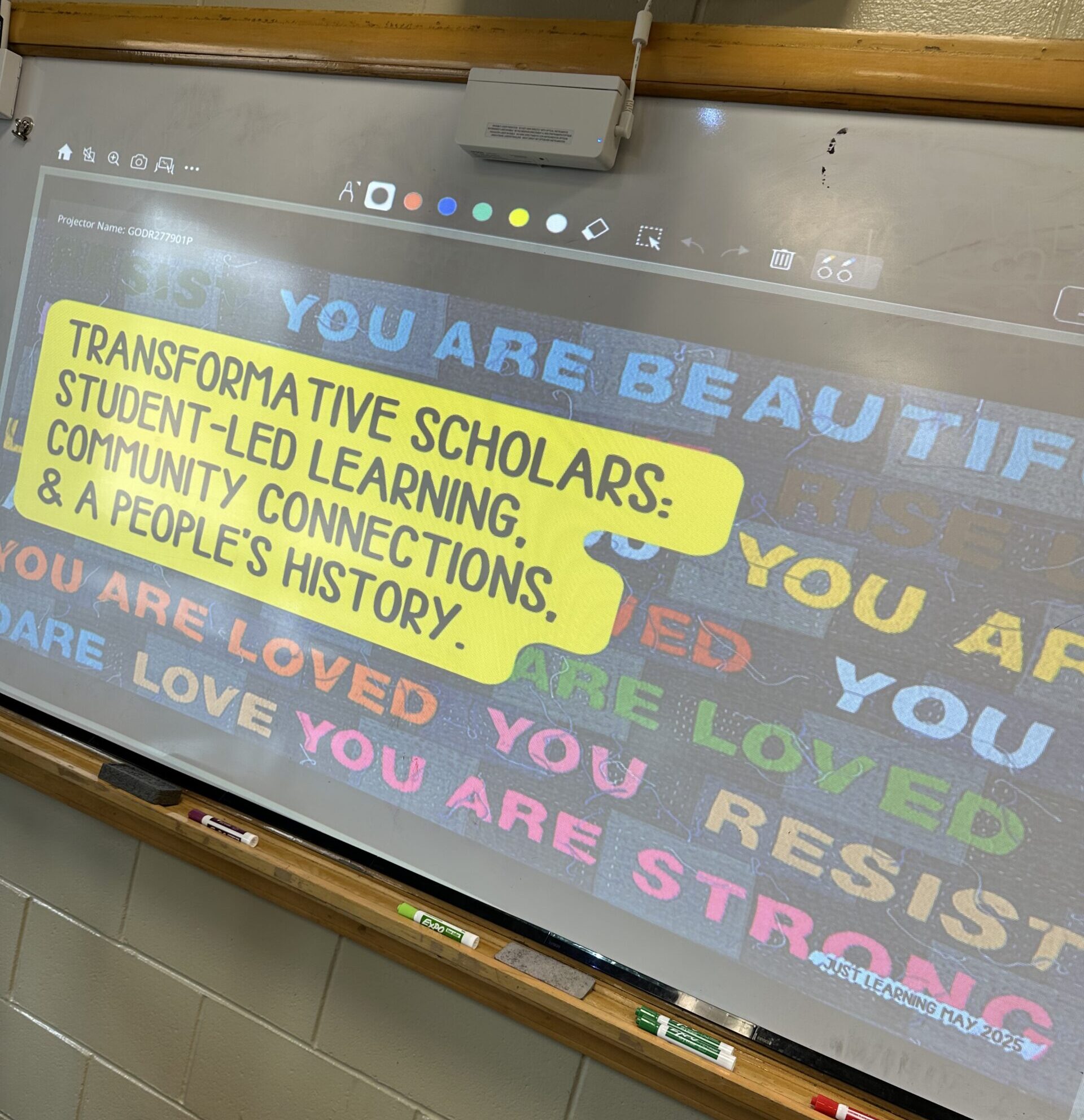
These are the community concerns students shared:
- A fear of deportation in our schools and homes
- Persistent homelessness in our city
- Money issues in our families
- Lack of mental health support or funding in our state
- The continuing effects of policies of segregation in our neighborhoods
- LGBTQ+ safety in our schools
On the second day, students reconnected with each other by using Linea King’s “Baby Steps Toward Restorative Justice” in Teaching for Black Lives. Our team started with the South African practice from King’s lesson, naming the strengths and gifts that each of us brings into the room.
Students also engaged in the “Resistance 101” mixer lesson to learn about the wide variety of change-makers and social concerns that are a part of our nation’s history. Students identified connections to the community concerns they brainstormed and decided which person they wanted to highlight for their final project. Students researched their unsung activist, using the following guiding questions:
- What issues did the activist care about?
- What strategies did the activist use to resist/protest?
- How did the activist make an impact?
- How does their life and work connect to the concerns that the group came up with?
Once the research process started, students decided that their collective final project would be to create postcards to send to people who needed an uplifting message and posters to be displayed in their school.
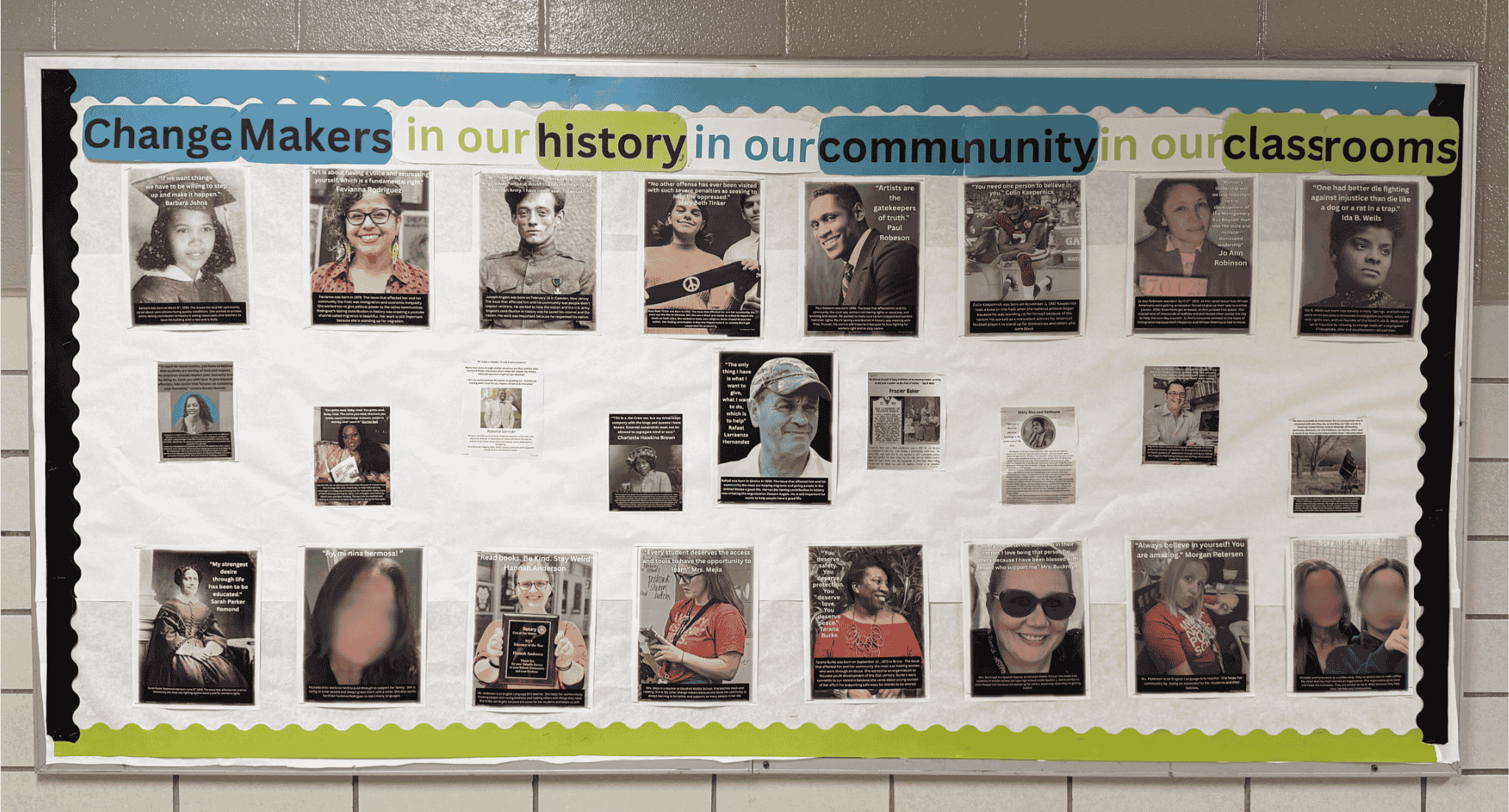
On the third day, students continued creating their individual final piece. When students were almost finished, they were asked to tie their unsung activist to someone they know in their community who shares the same concerns or resists in similar ways. Some students chose family members, while other students chose their teachers. One of the most memorable parts of the teach-in was when four of the students volunteered to share their collective project during the whole staff’s morning meeting. Students took turns sharing all the new topics they learned about, reciting poems they wrote, and thanking the people who helped to make this possible.
On our last contract day for teachers, the baton of brilliance was passed from students to staff, where teachers, leaders, and support staff had the chance to engage in similar Teach Truth activities. Eleven staff members came to school before contract hours to learn about the undaunted educators who are often left out of educational learning and yet have deeply impacted our field through their impressive efforts to repair the harm done through centuries of systemic oppression. Each educator added their own inspirational poster or postcard to the students’ final piece, where they are proudly displayed on a hallway bulletin board in our middle school.