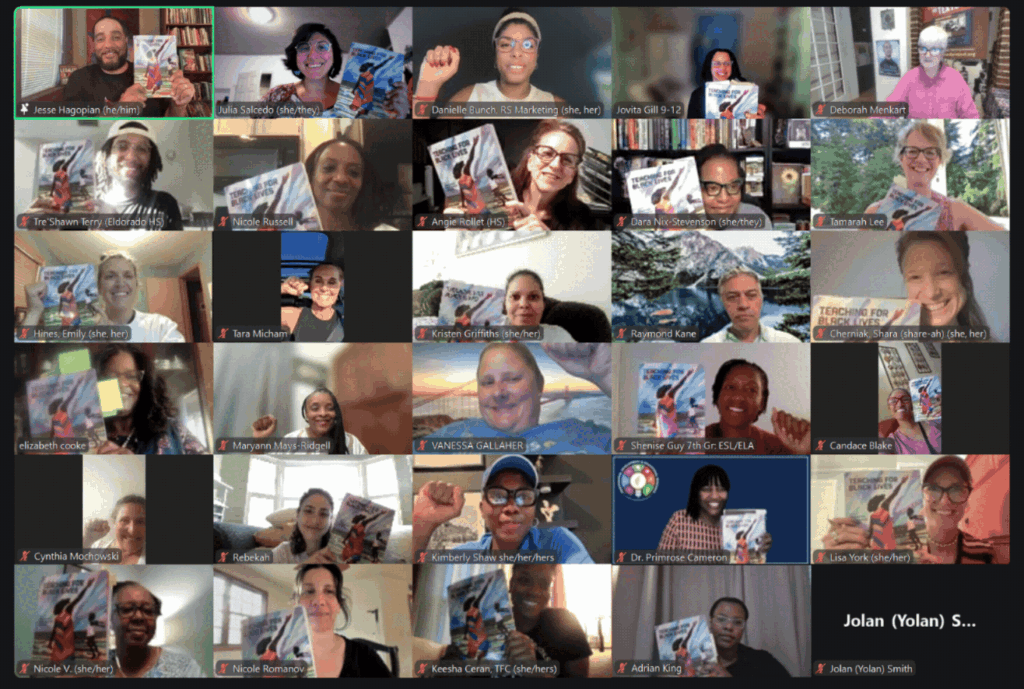
 This summer, the Zinn Education Project hosted and facilitated a virtual Teaching for Black Lives study group with over 60 educators across the country. One teacher said, “Given the current climate in our nation and assessing my district’s teaching of U.S. History, I feel compelled to equip myself with content and strategies to address issues as they arise in the classroom.”
Rethinking Schools editor Jesse Hagopian gave attendees a warm welcome and facilitated the meetings during the summer. Watch his short introduction.
Utilizing the facilitation guide and discussion guide prompts, the study group read and discussed the introduction and following chapters of Teaching for Black Lives:
- “Two Sets of Notes” by MK Asante
- “When Black Lives Mattered: Why Teach Reconstruction” by Adam Sanchez
- “Teaching SNCC: The organization at the heart of the civil rights revolution” by Adam Sanchez
- “How One Elementary School Sparked a Citywide Movement to Make Black Students’ Lives Matter” by Wayne Au and Jesse Hagopian
- “Space for Young Black Women: An Interview with Candice Valenzuela” by Jody Sokolower
- “A Message from a Black Mom to Her Son” by Dyan Watson
For the last meeting, group members reflected on how participating in the Teaching for Black Lives study group impacted them so far. See their responses on this Padlet.
Then, participants discussed the editorial of the Rethinking Schools Summer Issue, “Rethinking the American Revolution.” To expand on that topic, before small group discussions, educators watched the following video clips:
- Audiogram from a Teach the Black Freedom Struggle online class with Ned Blackhawk
- Kimberlé W. Crenshaw on American Revolution Myths
- “First America” podcast and trailer
At the end of the session, an ESL high school teacher said, “I learned the true history of the American Revolution and realized that my education was whitewashed.”
Here are some comments from the feedback survey:
The discussions also challenged me to think beyond individual lessons and consider how classroom culture, instructional choices, and even the questions we ask can either reinforce or disrupt inequities. The study group gave me a stronger framework and language for being more intentional about the decisions I make in my classroom. — Laquita Nicole Russell, teacher educator, Las Vegas, Nevada
Since 2020, the Zinn Education Project has supported educators leading their own local Teaching for Black Lives study groups. Each group receives:
- Teaching for Black Lives book for each participant (up to 20), study questions, and a meeting facilitation guide
- Rethinking Schools magazine subscription for each participant (up to 20)
- Introductory workshop featuring one or more editors of Teaching for Black Lives
- Access to several invitation-only webinars and workshops (panel discussions on current events, curriculum workshops, campaign planning)
- Closing event featuring one or more special guests
- Access to a network of other study groups and social justice educators across the United States
- Dedicated administrative support for study group coordinators
- and more!