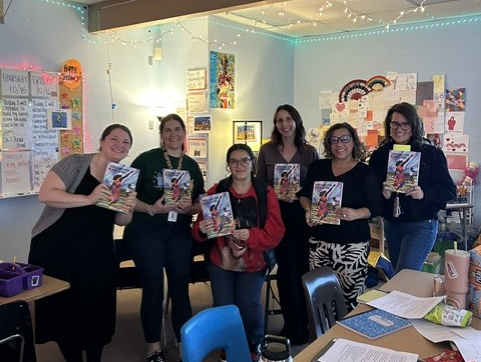

For the seventh year, the Zinn Education Project is fueling communities of anti-racist educators by sponsoring over 40 Teaching for Black Lives study groups across the United States for the 2026–2027 school year.

Educators from Alaska to Florida are reckoning with the history of this country while also helping their students think critically about how they can play a role in making the world more just, despite the ongoing repression and anti-education laws criminalizing honest teaching. A central finding of the Freedom to Teach and Learn Report is: fear is more powerful when educators are isolated, while collective support can expand the space in which teachers are willing to defend the freedom to teach and students’ freedom to learn. One elementary teacher and study group participant in Illinois said, “Coming together to learn, reflect, and practice is enlivening during a heavy chapter — we need each other to keep going.”

The Zinn Education Project (ZEP) is committed to supporting educators in this work. Study groups receive a copy of Teaching for Black Lives and a Rethinking Schools magazine subscription for each participant, a year-long menu of workshops and seminars to choose from, and access to a network of social justice teachers across the United States.

This year’s study groups represent 29 states, including Alaska and New Hampshire for the first time! Sixteen study groups are returning for the second, third, or fourth year to deepen their learning, organize for long-term wins, and strengthen the relationships in their communities. Read the descriptions of some of the groups below.

Four groups are led by teacher union locals.
Statewide, Florida

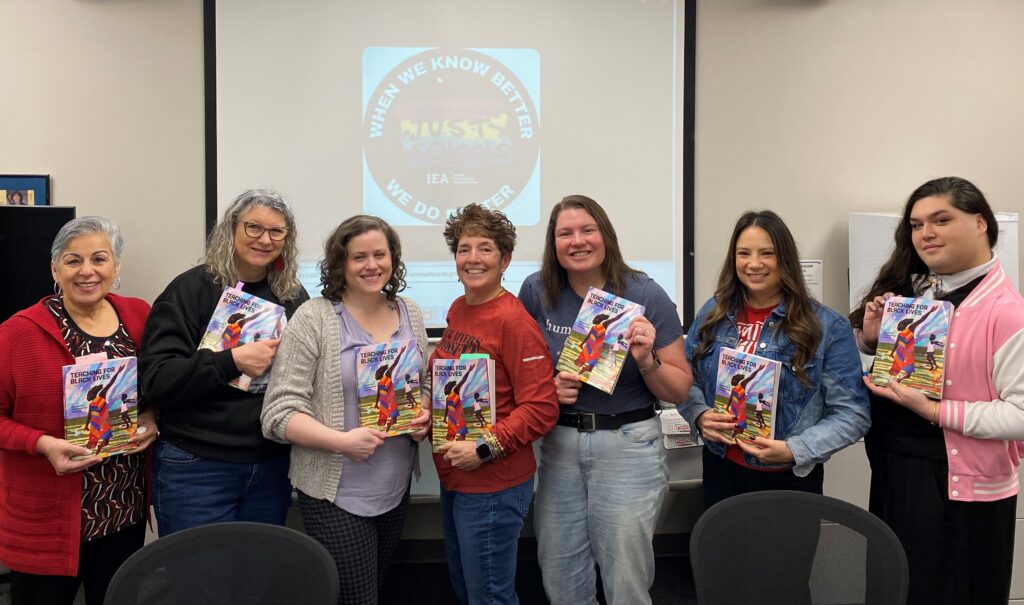
Professional Development Director Dr. Primrose Cameron, with the Florida Education Association and founder of the Sisters Build Network, participated in the Zinn Education Project’s summer 2026 study group. She said, “Legislation often times tries to erase our legacy and our history. It is important that as a community we come together to prevent this.”

This fall, Dr. Cameron is hosting a statewide Florida group with teacher union staff and members. Their goal is to “support greater belonging, affirmation, and academic success for Black students by identifying and implementing change to their curriculum, instructional practice, or classroom environment that reflects principals of Teaching for Black Lives, such as centering Black Joy in the classroom.” She plans to host meetings twice a month via Zoom. 

Statewide, Idaho

The Idaho Education Association’s Human and Civil Rights Committee is continuing the Teaching for Black Lives study group for a second year with eight individuals, including pre-K–12 teachers. Pierrette Madrid, high school ELA teacher and member, said,
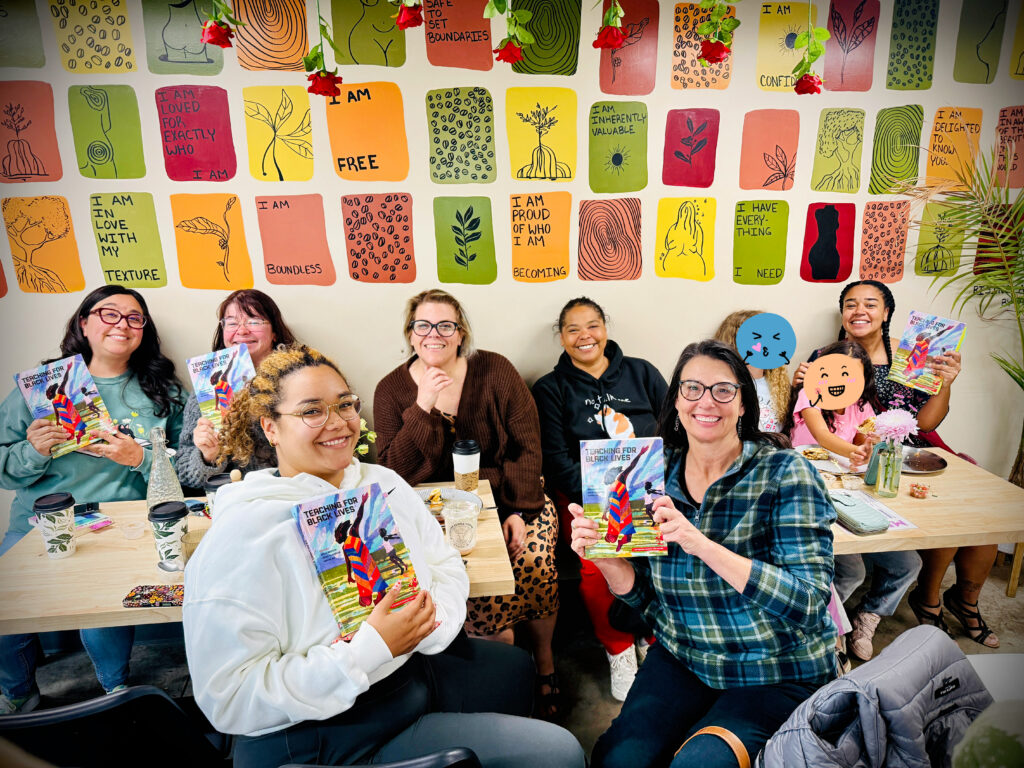
I am proud that my small town students grew to be more understanding about people that are different than them. We grew closer, which gave me the strength to take on anyone who might have thought I should have taught a more “white” curriculum (no one did).

The group’s goal this school year is to organize a Black Lives Matter at School event that involves all members throughout the state with the support of a new text, Black History Is for Everyone by Brian Jones. They’re excited about the possibility of “identifying collaborators/partners/allies in our local areas and bringing more people into this work.” One member said,

As teachers, we can sometimes read things quickly and move on. A study group helps us stop and think about what we are reading and challenges our preconceived notions in a constructive way with other educators.

Statewide, Minnesota

The African American Educators Forum (AAEF) of Education Minnesota, the NEA and AFT affiliate of the state, was already interested in forming a book club and “Teaching for Black Lives felt like a natural fit.” Londel French and Jennifer Ernst, union leaders with AAEF, are co-facilitating the group and opened participation to educators of all races. French shared,

Our group will be made up of educators from different schools and districts across Minnesota through AAEF. We want members to be able to talk about their own experiences as educators, learn from each other, take some of the ideas and resources back to their classrooms and schools, and talk about ways we can better support Black students and educators.

We also hope this helps us build a stronger community among our Black educators and keeps members more engaged in the forum. 

Reno, Nevada

Kaly Krentz, middle school music teacher, coordinated a Teaching for Black Lives study group in the 2025-2026 school year and plans to expand this year by offering this opportunity as professional development for members and educators in the NSEA (Nevada State Education Association). She said,

Educators need a lot more support in teaching Black history, especially on my part of the country. We have a diverse population of students with not a very diverse cohort of educators. Helping educators expand their way of thinking is so beneficial. . . . I like hosting these book studies because it creates an inclusive place where all of us can learn and grow together.

Five groups are led by teacher educators.

Long Beach, California

Jolan Smith, teacher educator at California State University and Teaching for Black Lives summer study group participant, is facilitating a group for her Future Black Educator (FBE) network, which will include College of Education Mary Jane Patterson Scholarship awardees and mentees, the FBE community of practice (teacher education students, college of education faculty and staff, in-service teachers and support staff, retired educators, and parents) and an FBE afterschool club for middle school students. She said,

Using the discussion questions provided with the study guide, we will do a deep dive into what action for Black lives looks like at all levels, from elementary to post baccalaureate. All subjects include stories of Black brilliance and resilience, and our future teachers need to be knowledgeable and empowered to integrate and center this knowledge.

Shreveport, Louisiana

Chantee Earl, Louisiana State University professor and returning Teaching for Black Lives study group coordinator, is hosting a new group for pre-service and in-service teachers, education professionals, and community members. She was formerly teaching at Georgia State University where she hosted her last study group, “a highly successful and meaningful learning experience.” She said,

Through our shared experiences, we strengthened our practice as educators, deepened our commitment to justice-centered teaching, and built a strong sense of community. One of the most powerful aspects was the creation of an intergenerational learning space where K–12 students, community members, preservice teachers, and practicing educators learned with and from one another. The experience demonstrated the power of bringing diverse generations and perspectives together around history, place, and community.

She hopes to recreate this experience at LSU this year!

Statewide, New York

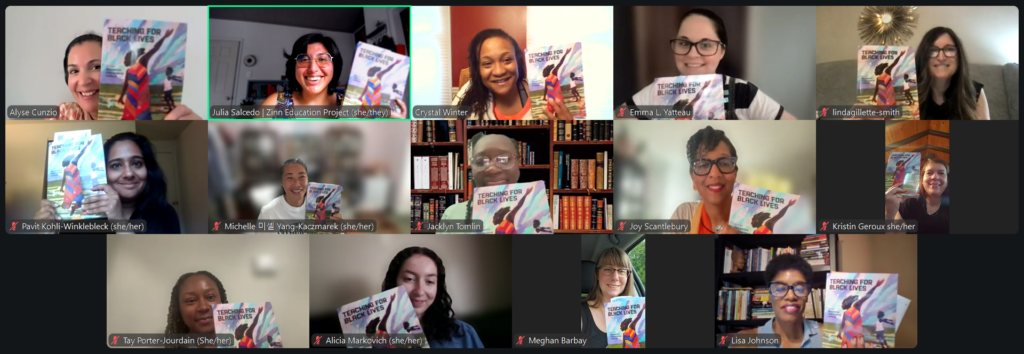
Alyse Cunzio, teacher educator and #TeachTruth event host, and Crystal Winter, middle school ELA teacher, are co-coordinating a Teaching for Black Lives study group that met throughout the summer and is continuing to meet throughout the school year. Cunzio said,

We all learned and grew tremendously — we had to reckon with other ways of thinking and seeing that made it clear that we do not have all the answers and we need spaces like this to wrestle with new ways forward. 

Sometimes the first step is the hardest. Frankly, at a time when this work is not popular and being at this early stage of my career in academia, I knew there were risks but those risks did not outweigh the needs and potential benefits of this group. I secured state support of multiple literacy organizations (ensuring a diverse participant pool) and sought out a  strong co-facilitator who was equally invested in anti-racist work.

Each meeting has anywhere from 15 to 18 active members with everyone committing to actions, such as “incorporating materials to teach truth in their discipline, community engaged actions like inviting ancestors of abolition and activists into classrooms to discuss how the torch gets carried forward, and creating awareness around pressing social issues in the community, inviting all stakeholders to the conversation.”

Winter shared,

A central cornerstone of our journey was the “Year of Purpose” tracker — a structured blueprint for both personal and collective accountability. It will serve as a continuous, year-round commitment to equity and justice rather than an episodic effort. By centering monthly principles — ranging from Diversity and Collective Value to Restorative Justice and being Unapologetically Black — the tracker ensures we embed actionable practices directly into our schools and communities from the very start of the school year and throughout.

Engaging in this collective work provided the space to look critically at how our school systems and community were handling student behavior, shifting the narrative away from purely punitive frameworks toward deep introspection and discussions of promoting proactive, healing-centered environments in the ways we can, right where we are!

This year, New York educators will also be reading the supplemental text, Black History Is for Everyone by Brian Jones.

Memphis, Tennessee

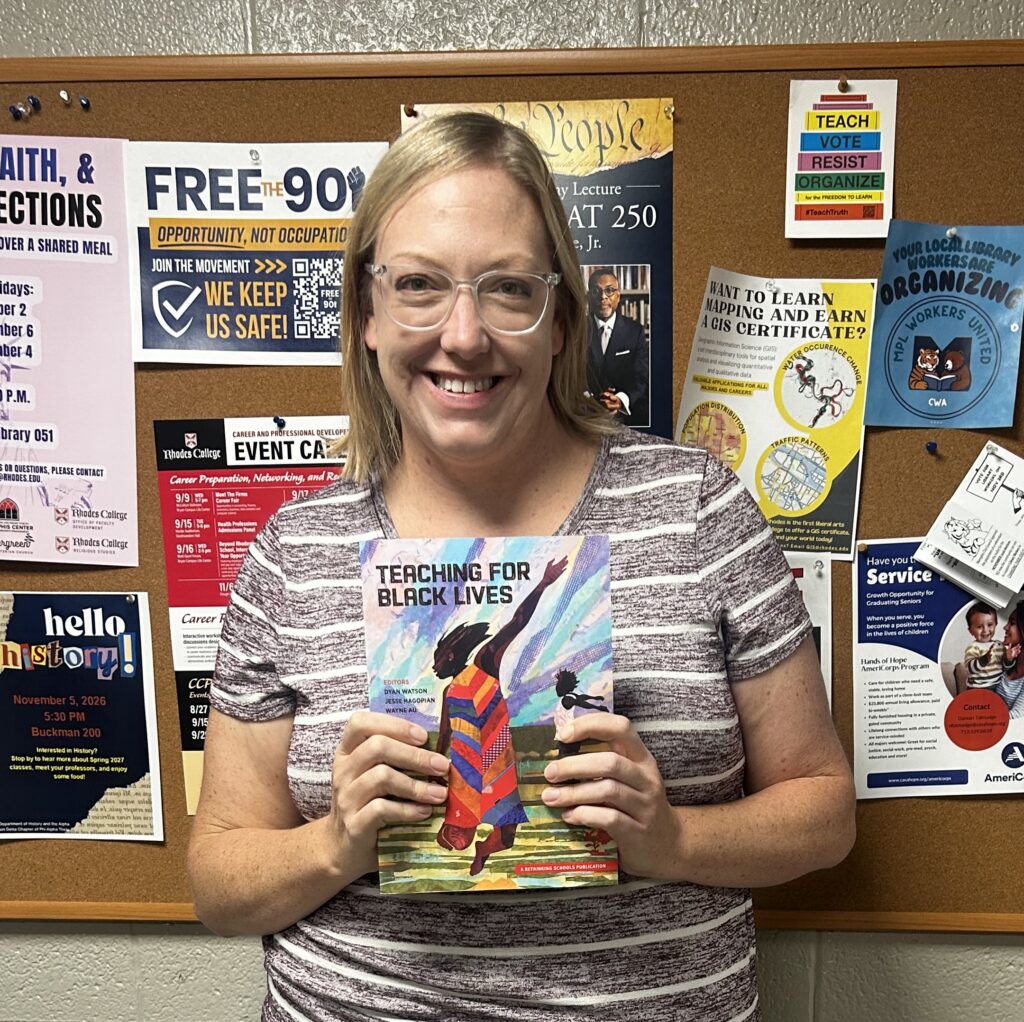
Laura Taylor, researcher, Rhodes College professor, and returning Teaching for Black Lives coordinator, is hosting a new group for teacher candidates (undergraduates) at Rhodes College and for alumni who are now teachers in Memphis. She said,

While I have many students who want to teach in anti-racist ways, this is not the kind of teaching they’re often observing in their K-12 classroom placements. My main goal would be to facilitate a space where teacher candidates can read about models of anti-racist and justice-driven pedagogy, as well as reflect on the challenges and possibilities of putting this into practice.  I also look forward to using this as a space to critically examine, deconstruct, and even freedom dream around the experiences they’re currently having in classrooms.

Additionally, through my interviews with study group members and facilitators, I’ve gotten to see how these study groups can be a space for community-building and organizing, which I would love to build on my campus/in my city. A long-term goal I have is to support the development of an anti-racist, social justice teachers’ group here in Memphis that would engage in activism and organizing around structural racism and inequity. I see this study group as a place to potentially develop the relationships and consciousness that might germinate into this kind of group.

Orem, Utah

Teacher educators at Utah Valley University are continuing to meet as a study group for their 3rd year. Last year, they partnered with the Black Student Union to host their first Black Lives Matter at School Week of Action event. This year, they hope to connect with local school districts to participate. For monthly meetings, members will be rotating facilitation to allow a different educator to select reading content from Teaching for Black Lives, Rethinking Schools, and/or Original Sins and facilitate a group discussion.

Laurel Dias, assistant professor at Utah Valley University School of Education and group coordinator, said

I am always hesitant to take more responsibilities on in my life but this is by far one of the most rewarding commitments I’m part of and it helps me make social justice a priority in my life.

And many more.

Anchorage, Alaska

The Alaska Coaltion of BIPOC Educators (ACBE) is hosting a study group that would “bring together a diverse group of Anchorage-area educators and community partners, including educators working across grade levels and content areas who are committed to strengthening culturally responsive practices and improving educational experiences for Black students and other historically underserved students.”

Rozlyn Grady-Wyche, English language arts and special education teacher, #TeachTruth event host, and group coordinator, said,

Our students deserve classrooms where they can see themselves, their history, their brilliance, and their joy reflected in what they learn. I hope to apply our learning by expanding the voices and perspectives represented in texts, personal narrative instruction, writing prompts, classroom discussions, and literacy activities. We will also examine how race intersects with disability, language, discipline, academic intervention, and access to rigorous instruction.

Elk Grove, California

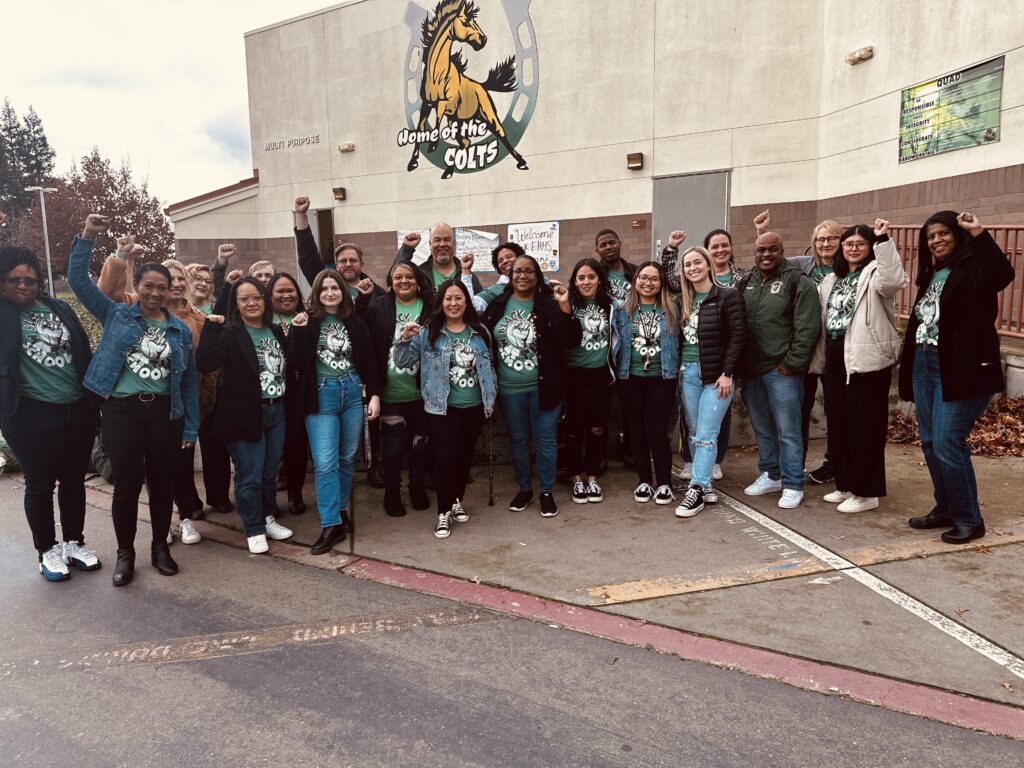
“We still got work to do! This is a never ending battle for Black Lives, Black minds, and Black educators,” said Sharae Green, middle school teacher and 4th-year group coordinator. The group continues to grow with the addition of a younger Black elementary teacher and their first male teacher participant. A big accomplishment for the group was submitting a Black Lives Matter at School (BLMAS) Week of Action Resolution through their union, EGEA, and members voted to approve it!

Elk Grove study group members have been active supporters of the BLMAS Week of Action. Green says, “Through our advocacy classes, students were able to reflect on why they matter here at Harris Middle School and we created a board in the cafeteria for students to post their reflections. We’ll create an additional goal together this year centered around AMPLIFYING BLACK VOICES: Learning from Experiences of Black Students & Their Parents in Elk Grove Unified School District.”

In addition to Teaching for Black Lives, the group also started reading Jesse Hagopian’s Teach Truth: The Struggle for Anti-Racist Education which they’ll continue to discuss this school year.

Statewide, New Mexico

New Mexico Council for the Social Studies (NMCSS) and the New Mexico Center for Democracy & Civic Education (NMCDCE) are hosting a statewide study group to build a professional learning community. Martina Gutierrez, high school social studies teacher and returning Teaching for Black Lives group coordinator, said,

New Mexico’s classrooms reflect incredible cultural and linguistic diversity, yet many educators are looking for support in teaching inclusive, inquiry-based history with confidence. We hope this cohort will build a lasting network of teacher leaders while laying the foundation for future professional learning, curriculum, and #TeachTruth action initiatives across the state.

Seatac, Washington

English Language Arts middle school teacher, Colleen Carpenter, formed a study group this year because she finds “study groups like this are a helpful way to keep myself and others accountable.” She aims to build on the schoolwide equity policies they’ve established and support discussions to ensure this anti-racist work continues.

Carpenter said, “Equity is often an after-thought and I’m hoping that through this group, we can work to make it an embedded part of everything we do at our school. There is power in numbers and the more folks we have doing this work, the more change we can make happen.”