
For the sixth year, the Zinn Education Project is fueling communities of anti-racist educators by supporting 58 Teaching for Black Lives study groups across the United States for the 2025–2026 school year.
Across the country, right-wing legislatures have passed laws and policies to criminalize teaching honestly about U.S. history and to restrict students’ ability to ask questions. Books have been banned and teachers fired. But despite this repression, educators everywhere continue to find ways to help their students think critically about the history of this country — and how they can play a role in making the world more just.
The Zinn Education Project (ZEP) is committed to supporting educators in this work. Since 2020, ZEP has hosted hundreds of Teaching for Black Lives study groups. Study groups receive a copy of Teaching for Black Lives and a Rethinking Schools magazine subscription for each participant, a year-long menu of workshops and seminars to choose from, and access to a network of social justice teachers across the United States.
This year’s study groups represent 30 states, including Idaho for the first time. Fifteen study groups are returning for the second, third, or fourth year to deepen their learning, organize for long-term wins, and strengthen the relationships in their communities. Two groups are led by teacher union locals.
In the end-of-year evaluations, teachers shared:
It reminded me that this work is not only academic; it’s deeply personal and rooted in relationships, identity, and lived experience. — Caitlin Pankau, Boise, Idaho
Working towards change can be exhausting, and I’m so thankful to know so many dedicated educators who are doing this work along side me, even if I don’t know them or talk to them all the time. — Kristi Bryan, Omaha, Nebraska
I am always hesitant to take more responsibilities on in my life but this is by far one of the most rewarding commitments I’m part of and helps me make social justice a priority in my life. — Laurel Dias, Orem, Utah
The study group deepens your thinking to realize that if you only teach Black people’s pain, you are missing their power. The lens shifts to actively centering Black resistance, joy, structural critique, and everyday brilliance. — Andrew Johnson, Weston, Massachusetts
It was one of the most diverse and supportive groups of female teachers I have worked with. Through this experience, I feel connected to a community of like-minded educators who see actively challenging white supremacy as a fundamental responsibility of our work as teachers. — Zeynep Brockett, Bay Area, California
Participating has been one of the most powerful professional and personal learning experiences I’ve had as an educator. The biggest benefit for me was gaining the awareness and courage to move from passive “allyship” toward becoming an active co-conspirator for Black students and families. — Stacy Anagnostopoulos, Sacramento, California
Being a member of a Teaching for Black Lives study group is an honor and a responsibility because we are truly organizers who are using our collective voices, values, and dedication to do what we can to change unfair mandates that affect youth, their families, and the education that they receive. As Dr. Bettina Love shared, “We have the opportunity to transform.” — Ina Pannell-SaintSurin, Brooklyn, New York
Here are descriptions of some of the groups.
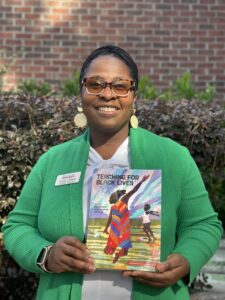
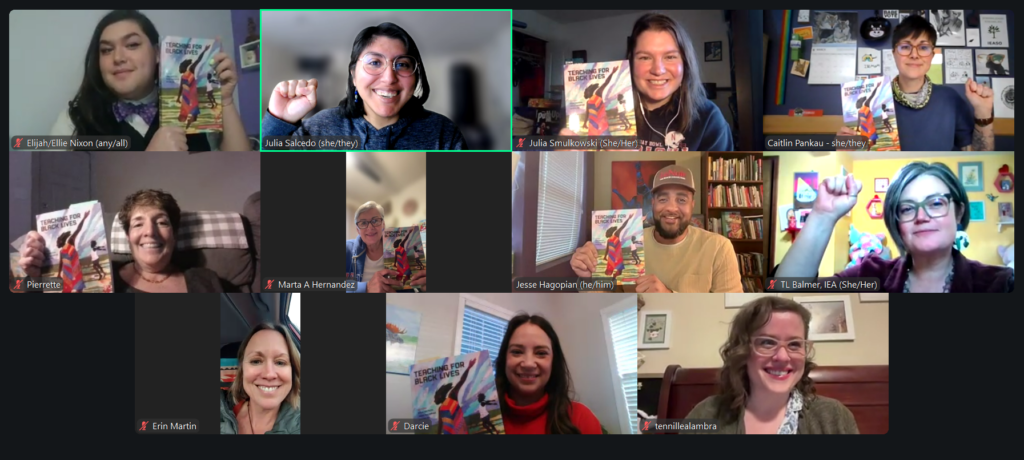 Committee members meet monthly, alternating between in-person gatherings and Zoom calls. After hosting a few meetings, Caitlin reports,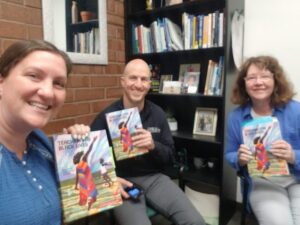
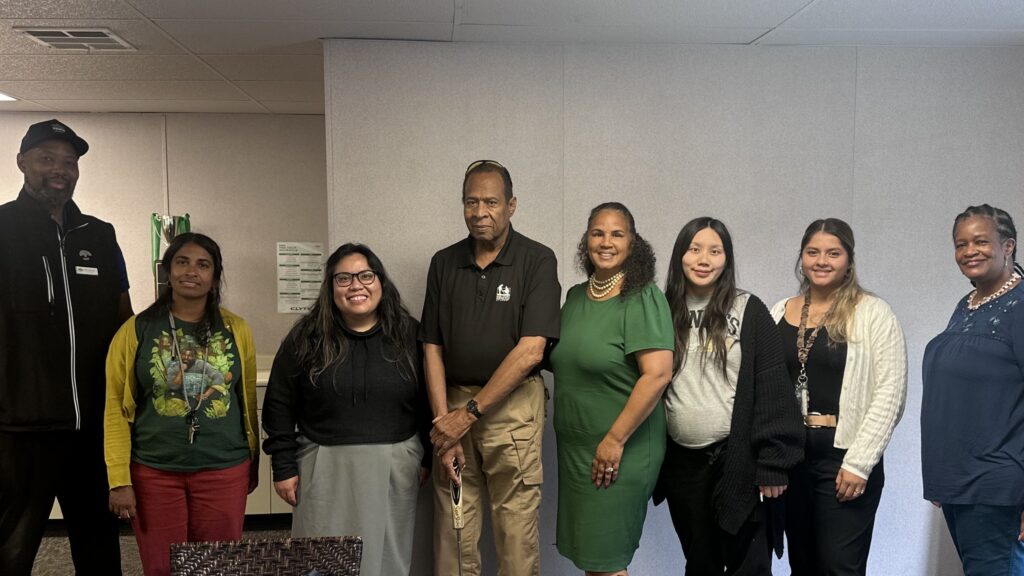
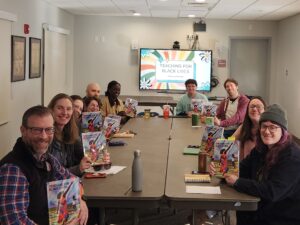 Julie Campbell, special education coordinator and group leader, said,
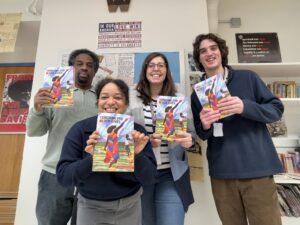 Seven K–12 public school teachers formed a Teaching for Black Lives study group, co-facilitated by high school social studies teacher Gaby Guzman, elementary teacher Patricia Truman, and middle school social studies teachers Rodney Jackson and Matthew Youngberg. They applied because they “want to challenge Montclair educators to examine their own racial biases, ideas, and paradigms and understand how these affect their teaching practices and student outcomes. We believe that