
For the sixth year, the Zinn Education Project is fueling communities of anti-racist educators by sponsoring 50 Teaching for Black Lives study groups across the United States for the 2025–2026 school year.

Across the country, right-wing legislatures have passed laws and policies to criminalize teaching honestly about U.S. history and to restrict students’ ability to ask questions. Books have been banned and teachers fired. But despite this repression, educators everywhere continue to find ways to help their students think critically about the history of this country — and how they can play a role in making the world more just.

The Zinn Education Project (ZEP) is committed to supporting educators in this work. Since 2020, ZEP has hosted hundreds of Teaching for Black Lives study groups. Study groups receive a copy of Teaching for Black Lives and a Rethinking Schools magazine subscription for each participant, a year-long menu of workshops and seminars to choose from, and access to a network of social justice teachers across the United States.

This year’s study groups represent 30 states, including Idaho for the first time. 15 study groups are returning for the 2nd, 3rd, or 4th year to deepen their learning, organize for long-term wins, and strengthen the relationships in their communities.

Two groups are led by teacher unions.
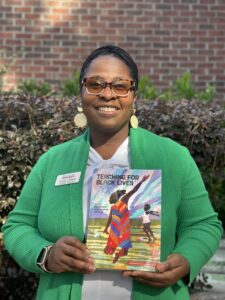
Alana Ward

North Charleston, South Carolina

Alana Ward, UniServ Director of The South Carolina Education Association’s, sent an email blast to the Human and Civil Rights Committee and general members to join a Teaching for Black Lives study group — 40 educators signed up to participate. Alana, group coordinator, said,

South Carolina leads the nation in book bans and attacks on the teaching of racially just materials.  It is my hope that this book study will help educators address some of these concerns and come up with strategies to increase awareness of the needs of Black students, while also laying the groundwork for the dismantling of the systems of racism that have taken root in our state.  There is so much work to be done here and I am convinced that awareness is the first step.  Through raising awareness, we can gather the tools necessary to prepare for the fight and then we can engage in the battle of creating change.

The group meets monthly in-person and via Zoom since October 2025 to discuss readings, the chapters “When Black Lives Mattered: Why Teach Reconstruction” and “Reconstructing the South” were a highlight. Educators analyzed their textbooks and “were able to report back about the discrepancies found between the texts being used and the truth.” Ward said,

Many people are doing further investigation into the language used in textbooks that seeks to alter the perception of true history.  We are also working on a field trip to broaden our own knowledge and equip ourselves to teach the truth to our students.

Statewide, Idaho

The Idaho Education Association’s Human and Civil Rights Committee of 13 individuals, including nine pre-K–12 teachers and one university professor, formed a Teaching for Black Lives study group to “fulfill the promise of public education to prepare every student to succeed.” Caitlin Pankau, union staff liaison and group coordinator, said,

Due to the current political climate nationally and in Idaho, a goal of the study group is to create spaces to nurture mutual support and resistance in the midst of attacks on teaching honestly about U.S. history, racism, and LGBTQ+ identity. We plan to use this study and learning to enhance the information we share with local and regional members. In their schools, the members of the committee will help apply and integrate the learning into lesson plans for students across all content areas and grade levels and offer support to other educators.

Committee members meet monthly alternating between in-person gatherings and Zoom calls. After hosting a few meetings, Caitlin reports,
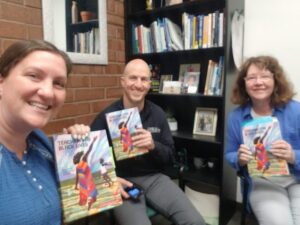
The materials and monthly guide are incredibly helpful starting out as a new group. One of our first activities was to rely on the Racial Autobiography to guide reflection on how we are showing up in the book study space; to help us build self-awareness and to understand how our past selves inform our present selves and how that can impact our students, colleagues, etc.

Two groups are led by teacher educators.

Indianapolis, Indiana

Monique Harris, Associate Professor at Butler University, formed a Teaching for Black Lives study group made up of 13 pre-service teachers and veteran educators. She said,

Educators need a space for reading and discussion, and the safety of having critical conversations. As a Black educator, I understand the importance of understanding the social, cultural, historic and political moments and movements that have preceded us. It is also crucial that as educators we understand that our work in education is not apolitical and that we are obligated to do our internal work so that we are not causing harm in the classroom space. I want to provide a space where educators find the tools and resources to become disruptors in the respective schools as we push back against oppressive policies and the attempted dismantling of the public education system.

Orem, Utah

Laurel Dias, assistant professor at Utah Valley University School of Education, formed a Teaching for Black Lives study group in 2024–2025. Her and two members returned for a second year to “expand from the Teaching for Black Lives book to include Rethinking Schools magazine issues and other content from the Zinn Education Project.” They recruited more teacher educators and high school teachers, for a total of nine members. Laurel said,

The political climate in Utah is fighting hard against DEI in education and we’d like to strengthen our study group to create a community who understands the importance of valuing Black lives in schools.

The group meets monthly in-person. After a few meetings, Laurel reported,

Each meeting we begin with a connection to Teaching for Black Lives either from the website or by a study group member who participated last year. Our group dedicated time to plan for Black Lives Matter at School Week of Action. We partnered with the Black Student Union to host an event with different stations that had activities related to the Black Lives Matter at School guiding principles! It was our first event and pretty successful!

And many more.

Bay Area, California

For a second year, Elizabeth Cooke, elementary substitute teacher and group coordinator, is hosting a Teaching for Black Lives study group to dive deeper into the text and added STEM For All by Leena Bakshi as a supplemental text. She hopes “to revisit and reimagine our lesson plans, and grow a living collection of resources that reflect the brilliance and diversity of our East Bay students and communities. The heart of our work is a simple but powerful goal to make learning feel relevant and meaningful for every child in our classrooms.”

Four STEM educators attend monthly group meetings co-led by Miranda Maybelle, elementary Science teacher educator. They frequently invite guest speakers. During one session, Lake Chabot Golf Course presented on the history of African Americans in golf and the book Uneven Lies.

Elizabeth is a regular attendee in monthly Teach the Black Freedom Struggle online classes, she said,

Each one has been informative and eye-opening in its own way. I volunteer to facilitate breakout discussions, which have been some of the most enjoyable and meaningful professional learning experiences I have had. They were filled with honest conversation and real connection among educators.

Los Angeles, California

Educators from Homeschooling LA formed a Teaching for Black Lives several years ago and returned because “members learned so much! We were able to incorporate a new view of history from a more accurate depiction. When you are actively working to decolonize without guidance it can be hard. ” Tina Janzen, group facilitator, said,

I vividly remember previous studies on the Black Panther Party (BPP)! Transforming! I learned the BPP was akin to terrorists. That section blew me away with what they actually did.

After hosting several monthly meetings, Tina reported on a meaningful discussion of the reading “Burned Out of Homes and History”:

We have several members that were not born in the U.S. and they were baffled as to how this history is not taught in school. Several of us knew the story, but the reading provided a much more in depth look. I would say the overall feeling of reading this chapter was sadness, shame, and a feeling of injustice that those who experienced it never received justice and their stories rarely told.

We also agreed that Black History should not be reserved for just February and Black history is American history.  We decided to learn some type of history involving Black Americans every month from here on out.

Weston, Massachusetts

Teachers, assistant teachers, and counselors at The Gifford School (grades 4-12), a therapeutic special education school that partners with public school districts, described having a tough school year in addition to the political attacks on anti-racist teaching and LGBTQ+ students. They were motivated to form a Teaching for Black Lives study group to “do more with our DEI work and take the work to a new level. We want to understand why our students of color feel isolated and less supported, and we are interested in exploring intersectionality, which is especially relevant for our neurodiverse students.”

Julie Campbell, Special Education Coordinator and group leader, said,
Knowledge, insight, and perspective gained from the study group will be utilized in cross-school programming for all Gifford students. Concurrently, we aim to improve community cohesion, building resilience and a sense of belonging among students and staff.

Schools and the New Jim Crow” provided us with a challenging and reflective conversation about the criminalization of Black youth. As a special education school many of our students face extra challenges in terms of discrimination and exclusion. We have had several discussions about the intersectionality of disability and race. Also, many of the articles from Section 2: “Enslavement, Civil Rights, and Black Liberation” had us reflecting on our own education and what we were unconsciously passing on.

Omaha, Nebraska

Four middle and high school teachers, and two librarians from Omaha Public Schools formed a Teaching for Black Lives study group to “better advocate for our Black students and help achieve equity for all of our students.” Kristi Bryant, librarian and group coordinator, said,

Instead of being led by our own instincts, we will be guided by the research and wisdom of experts. Ultimately, we would like to see other teachers from our district become involved, which will increase the impact of our work.

After hosting a few month meetings, Kristi reported,

Space for Young Black Women: An interview with Candice Valenzuela” sparked an interesting conversation in our group, since one of our teachers had observed a significant difference in the way some of our students (who often have a lot of responsibility at home) resist authority here at school. We talked about how we need to be aware of students’ circumstances and understand where they’re coming from when we encounter challenging behaviors.

Las Vegas, Nevada

Jenifer King, elementary teacher and group coordinator, applied after she analyzed their mandated reading curriculum and noticed how white males are centered even when educators have text options that highlight Black history and joy. Jenifer and five elementary teachers meet monthly to discuss Teaching for Black Lives. After four meetings, she reported,

The “Happening Yesterday, Happened Tomorrow” and “Two Sets of Notes” poetry readings really spoke deeply to us, and again showed us something that could so easily be replicated in our school (adapted to an elementary level).  I introduced a very uncomfortable (for me) subject in a quick write, and the kids wrote and discussed with an alacrity and passion that I had never seen in them before. They asked, ’Ms. King, can we do more quick writes like this?” which they had never asked before. The others in the group have reported similar experiences.

We conducted an analysis of the prescribed curriculum for ELA (and ostensibly Social Studies within it), that showed clear bias and inequity in both content and general representation. This has been presented to administration, and pressure is being applied.

Our school newspaper has added a Black and brown Joy feature to its layout.  We have plans in the works for a Family Culture and Heritage Share Night, as well as using our Nevada Reading Week to highlight local Black and brown authors and Career Day to bring in as many Black and brown professionals as possible, that will give our students some role models.

Montclair, New Jersey

Seven K–12 public school teachers formed a Teaching for Black Lives study group, co-facilitated by high school social studies teacher Gaby Guzman, elementary teacher Patricia Truman, and middle school social studies teachers Rodney Jackson and Matthew Youngberg. They applied because they “want to challenge Montclair educators to examine their own racial biases, ideas, and paradigms and understand how these affect their teaching practices and student outcomes. We believe that, until teachers and administrators realize the impact racism has on our students and parents, we are failing our community.”

The group read “How One Elementary School Sparked a Citywide Movement to Make Black Students’ Lives Matter” and this inspired them to developed age-appropriate resources and activities for elementary, middle, and high school educators for Black Lives Matter at School Week of Action. To uplift the Black Villages & Diversity guiding principles, all grade levels were encouraged to watch the documentary Our Schools, Our Town, which shows the history of desegregation of Montclair Schools.