Study Groups Grew Stronger: 2024–2025 School Year

The political attacks didn’t shut us down; they sharpened us. The external pressure revealed how vital this work is and how important our solidarity and resolve must be. Far from shrinking, our commitment to teaching truth and centering Black lives has only grown stronger. — Macphina Long, elementary teacher, Athens, Georgia

During the 2024–2025 school year, the Zinn Education Project sponsored a cohort of more than 60 Teaching for Black Lives study groups who remained steadfast in their commitment to build communities of resistance and hope.

In addition to discussing chapters and articles from Teaching for Black Lives and Rethinking Schools, educators attended monthly online classes and curriculum workshops, adapted people’s history lessons, and more. Read about their experiences and highlights below. 
Elk Grove, California

An alumni group of four educators from Edward Harris Jr. Middle School met monthly in-person and virtually. Cheena Moslen, teacher educator and participant, said,

The study group came at a time when I needed to talk through the things that were happening not only in the world but in classrooms. How we need to shift our practices because the systems were never built with Black children in mind. It was the grounding I needed.

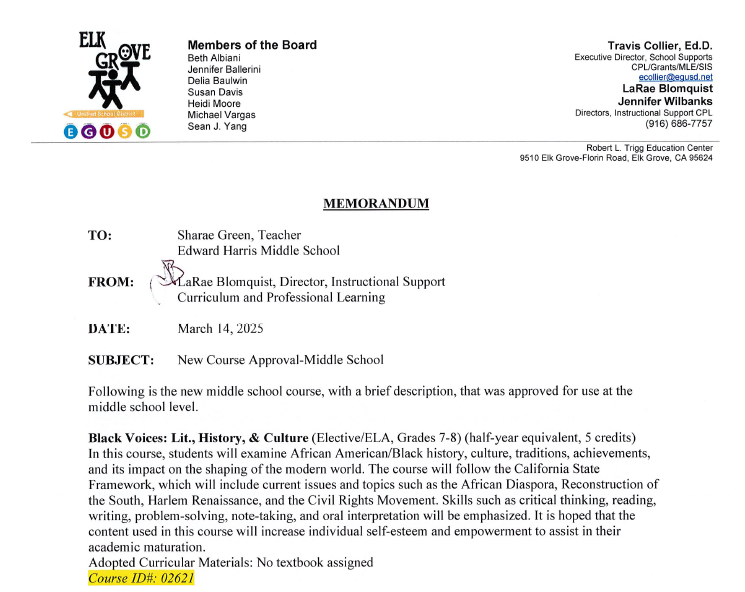
In March 2025, Sharae Green, Teaching for Black Lives coordinator and middle school teacher, excitedly shared that a new course, “Black Voices: Literature, History, & Culture” was submitted and approved to be taught across Elk Grove Unified School District at the middle school level for the 2025–2026 school year and beyond. Green said,

It was an emotional, hard fought battle but I wasn’t going to give up! I’m so pumped!!

At the end of the school year, the group reported that they met with the school board president to work on a resolution to support Black Lives Matter at School Week of Action district wide. Green said,

We’re in the deep throes of white backlash and this group gives me fuel to keep f’n fighting!

Hayward, California

Twelve educators from Hayward Unified School District met in-person monthly as a Professional Learning Community. Dr. Candace Cofield, group coordinator and district office administrator, said,

This year, our group reflected deeply on “When Black Lives Mattered: Why Teach Reconstruction” from Section 2: “Enslavement, Civil Rights, and Black Liberation” from Teaching for Black Lives. We grounded our learning in the power and possibility of that era — when Black lives, Black actions, and Black ideas fundamentally reshaped democracy. We sat with stories of formerly enslaved people becoming legislators, of self-governance in the Georgia Sea Islands, of collective organizing in the Union Leagues, and of the ripple effects that inspired movements for labor and gender justice. Together, we asked: What does it mean to reimagine our schools as places where Black joy and Black justice can thrive — where the revolutionary potential of Reconstruction lives on?

Our photojournalism project emerged as a way to respond. Educators and students together captured and created moments that reflected our collective commitment to reimagining schools as spaces of justice and joy even as they also facilitate harm. This project reminded us that teaching for Black lives is not only about resisting harm, it’s about expanding the capacity for joy, humanity, and transformation within ourselves and our school communities.

Sacramento, California

Fifteen administrators and support staff from the California Department of Education engaged in virtual Wednesday morning meetings every three weeks to discuss Teaching for Black Lives. Nicole Seymour and Jennifer Osalbo, co-coordinators, reported,

In a time when honest discussions about race and history are under attack, this group has been a vital source of strength and resilience. Our group only became stronger because we realized how much work we have to do. We are now better prepared to sustain anti-racist teaching and to advocate for curriculum changes that honor the full humanity, creativity, and contributions of Black people in our schools, from the earliest grades and beyond.

Des Moines, Iowa

Seventeen educators from Goodrell Middle School and a school psychologist met monthly in-person. Haileigh Mejia, middle school special education teacher and group coordinator, said,

This is a great way to model uncomfortability, learning, unlearning, and growth mindset to our students. No human being has all the answers, many meetings can have uncomfortable moments. But having a community to learn and grow with outweighs any of the challenges. We can show our students we are life long learners as well, and sometimes we have incorrect information and learn as we obtain more knowledge.

At the end of the school year, Mejia and Petra Lange, a student teacher, organized a three-day Teach Truth Teach-in of poetry, research, and activist art. Ten to fifteen middle school students engaged in activities, culminating in a poetry anthology and a collective project to highlight their learning on the impact an individual can have on an institution, their community, and our history. Read more.

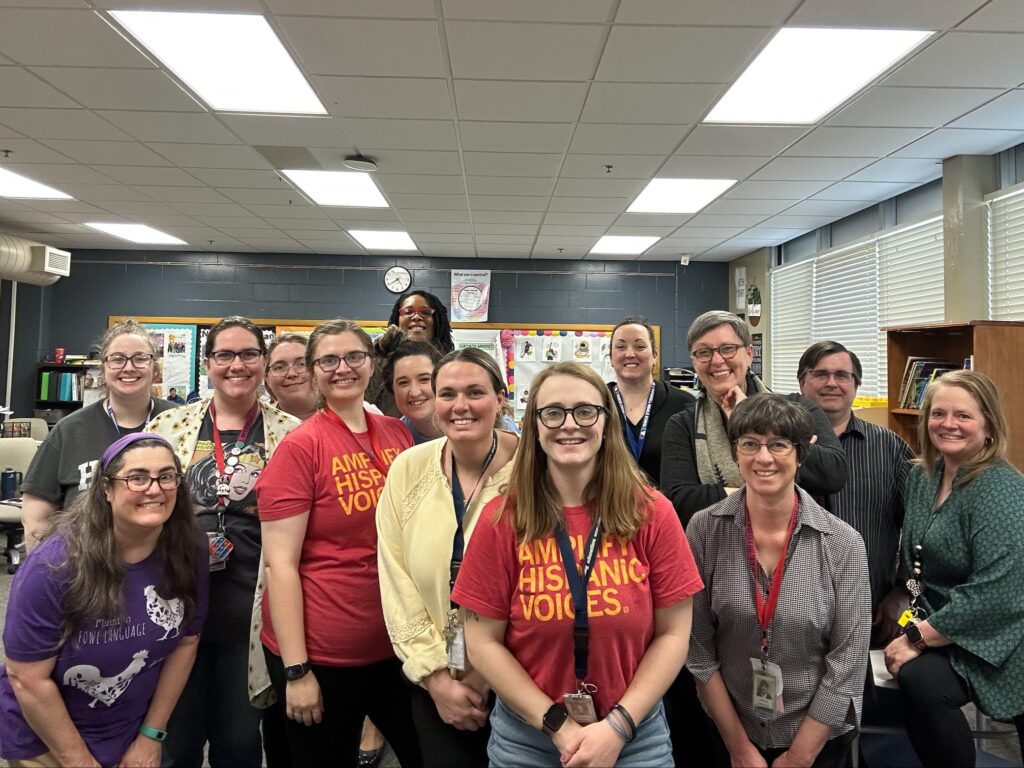
Des Moines Study Group Members

Kansas City, Kansas

A district-wide cohort of fifteen educators from Kansas City met monthly and started working on staff, student, and/or family facing projects to pilot next year. The goal is to improve the learning environment for Black students. Jennifer Balke, high school librarian and group member, shared,

As a result of this group, I have begun thinking about how we can incorporate Black history into pretty much every school subject from world languages to STEM classes. So much of this history is only beginning to be taught, but as a school librarian, I can collaborate more with our classroom teachers to make sure it is. I had an awesome experience collaborating with our Government teacher to teach a lesson on the different types of protest we see in the U.S. and how deeply kids engaged in discussing and thinking about this.

Tara Micham, high school social studies teacher and group member, said,

It has been life/teacher changing for me. There isn’t a clinic/workshop/seminar that could have even come close to the impact I’ve received here.

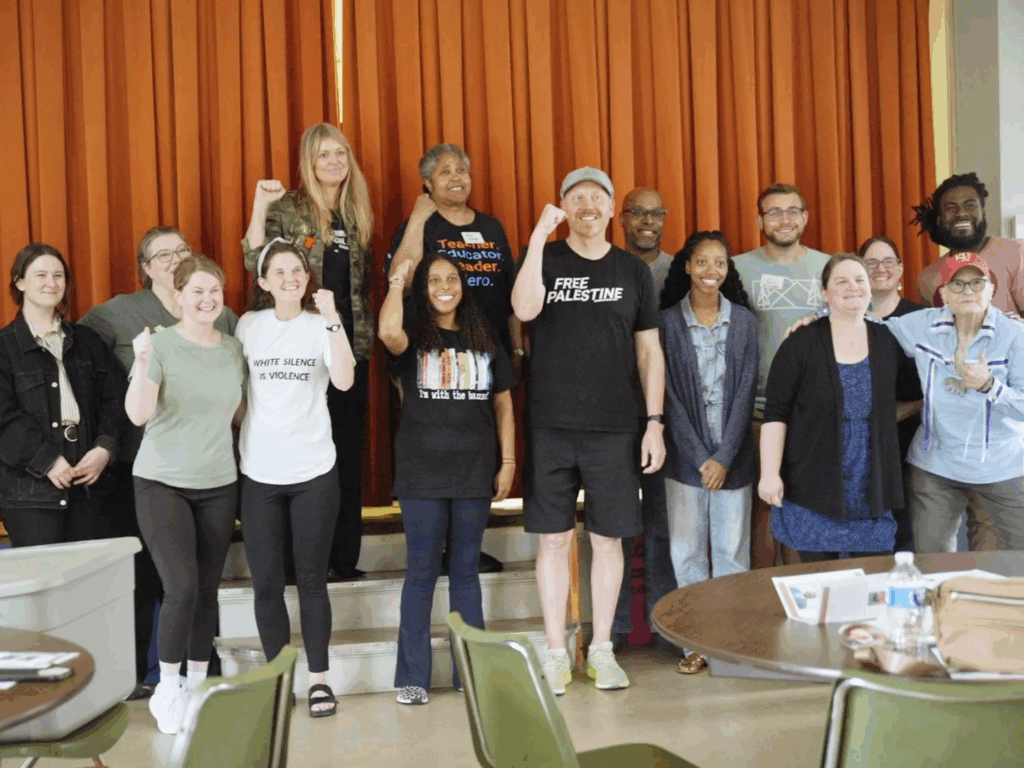
Kansas City #TeachTruth Teach-In Organizers and Participants

At the end of the school year, study group members, Showing Up for Racial Justice–Kansas City, and Education Core hosted a #TeachTruth Teach-In to educate community on the colonial history of the Shawnee Indian Mission and Northeast Kansas.

Portland, Maine

For the third year, ten educators from Waynflete elementary school met monthly. Sarae Pacetta, early childhood teacher and group coordinator, said,

This group is a grounding force for me. I have thought-partners and allies at each grade level and across specialists, too.

Participants read Rethinking Schools issues to supplement the shared text and the article “The Story of a Seed: Food Sovereignty in an Elementary Classroom” was a group favorite. Pacetta said,

It was *perfect* for where we are as a school since we are reorganizing the central social studies and science themes we’re using.

One member said,

I love articles that are stories from classrooms. They help me envision different ways teaching can look and are the best way for me to get inspired.

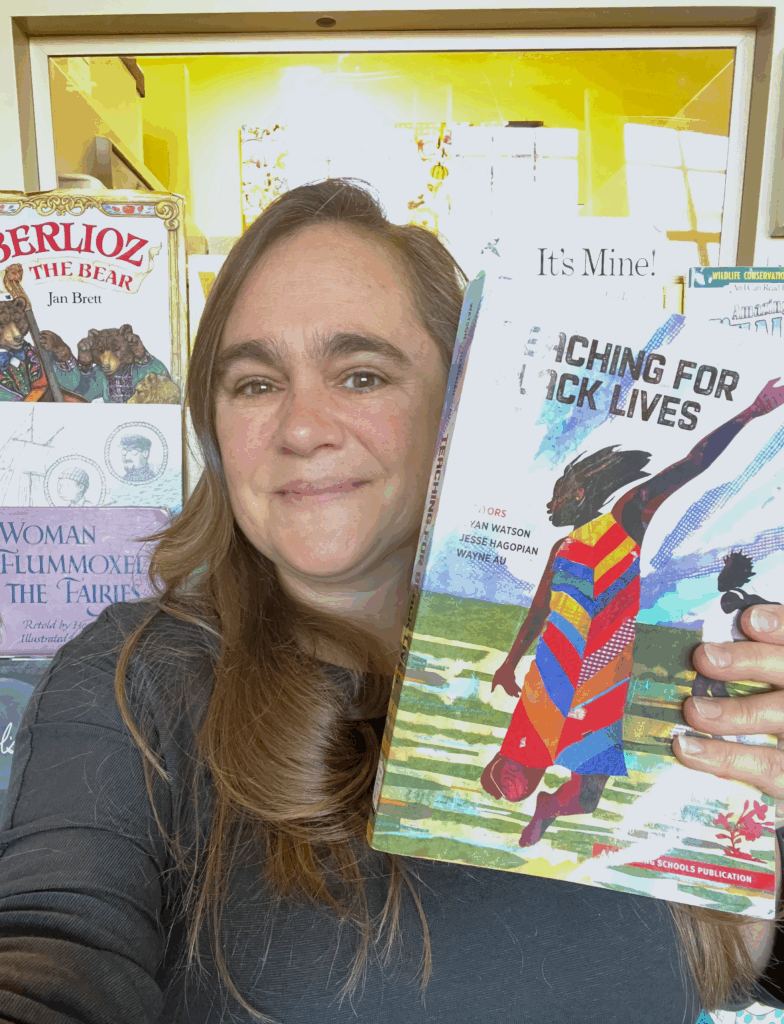
Sarae Pacetta

Winnipeg, Manitoba

Seven educators from the Seven Oaks School Division (K–12) met monthly. Fortunato Lim, group coordinator and divisional principal, said,

We are planting seeds for “generational wealth” that honour and serves all in our community, particularly those that have been impacted by oppressions and systemic racism.

One member, a high school teacher, said,

Being able to share openly and honestly about the challenges young Black students face has allowed me to dive into the systemic causes and look at ways to begin to address some of the barriers that are in their way. I have so much to unpack in

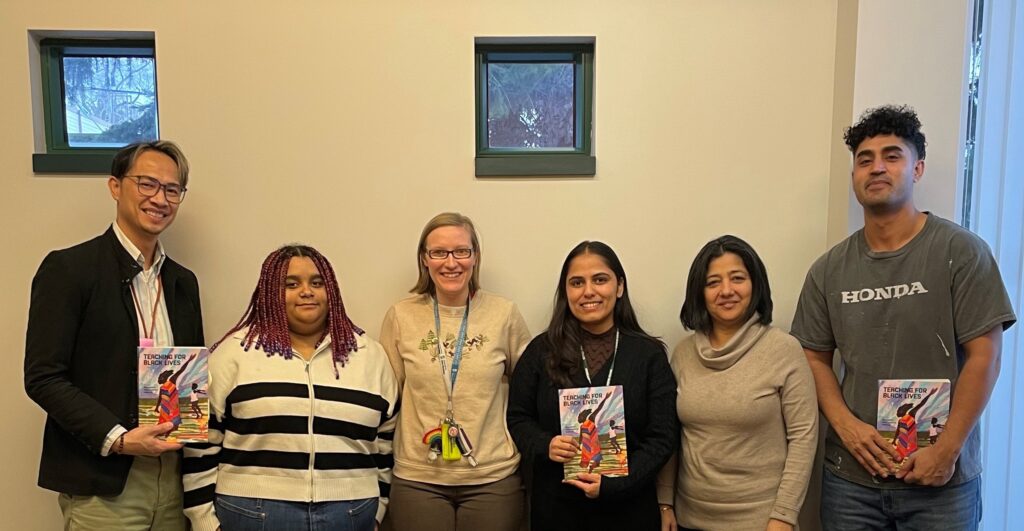
Seven Oaks Study Group Members

our shared history but it is nice to be supported by my admin to work on projects and tackle issues that are needing to be addressed so that students can have more opportunities.

Baltimore, Maryland

Nine secondary educators from Baltimore city schools met monthly for two hours — one hour dedicated to study Teaching for Black Lives and the second hour focused on yoga and wellness. Tonette Campbell, English Language Arts and African American studies high school teacher and group coordinator, said,

Teaching for Black Lives study groups aren’t just book clubs — they’re brave spaces where educators come together to learn, unlearn, and grow in solidarity. Being part of a study group reminded me that transformation in education begins with community. It gave me the tools, language, and collective energy to push back against inequity and reimagine what education can look like for Black students.

Kachobe Lassiter, high school teacher and group member, said,

This group is essential to my professional development and for my dialogue with my students. Getting to know my students’ culture is eye opening and the study group keeps me grounded in history and alert to the importance of connecting with them.

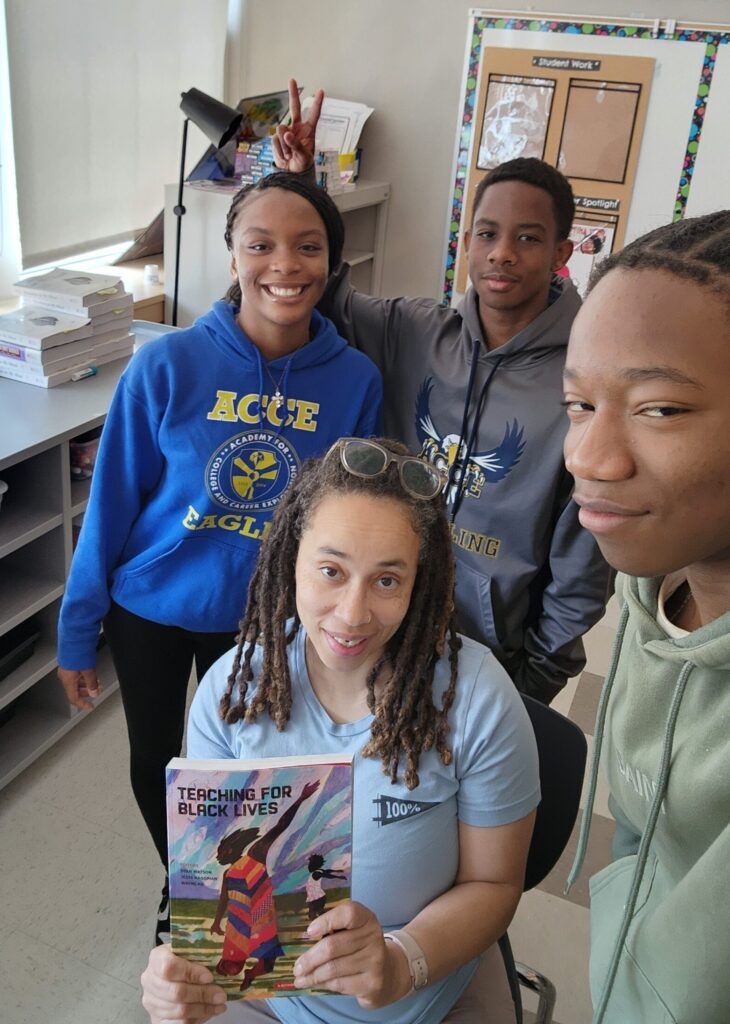
Tonette Campbell, holding Teaching for Black Lives, with students

Silver Spring, Maryland

Seven teachers from The Sienna School (3–12), a private school serving students with dyslexia and language-based learning differences, met monthly. Samantha Fletcher, elementary teacher and group coordinator, shared,

For Black History Month, students participated in “I Used to Believe . . . Now I Know . . . ” activity. Our study group made a video sharing ways that we had learned lots of misconceptions or mis-teachings around racial issues that we now know better about in an effort to model growth and commitment to learning/re-learning.

The Sienna School faculty study group members.

Silver Spring, Maryland

Nine educators from Montgomery Blair High School met monthly. Leslie Blaha, staff development teacher and group coordinator, shared,

We hosted a school wide Black Lives Matter at School event, which we never would have done without the motivation from this group.

One member, a high school English teacher, said,

I’m proud that was an active participant in our Black Lives Matter at School day planning. In older times, I wouldn’t have offered to help, due to my feeling like as a white person, I don’t have anything to offer, it’s not my place to be.

Montgomery Blair HS Study Group Members

Carver, Massachusetts

Nine secondary educators from Carver School District met monthly after school. Tammy Johnson, math teacher and group coordinator, said,

The study group, workshops, and classes with other educators across the country have assisted me in developing a stronger community within my own classroom with my students. We have utilized what we have learned to incorporate an African American Studies course in the high school and developed our Diversity Inclusion and Equity Committee into a force ready to create change in our school community with a plan that reaches everyone from administration to our students.

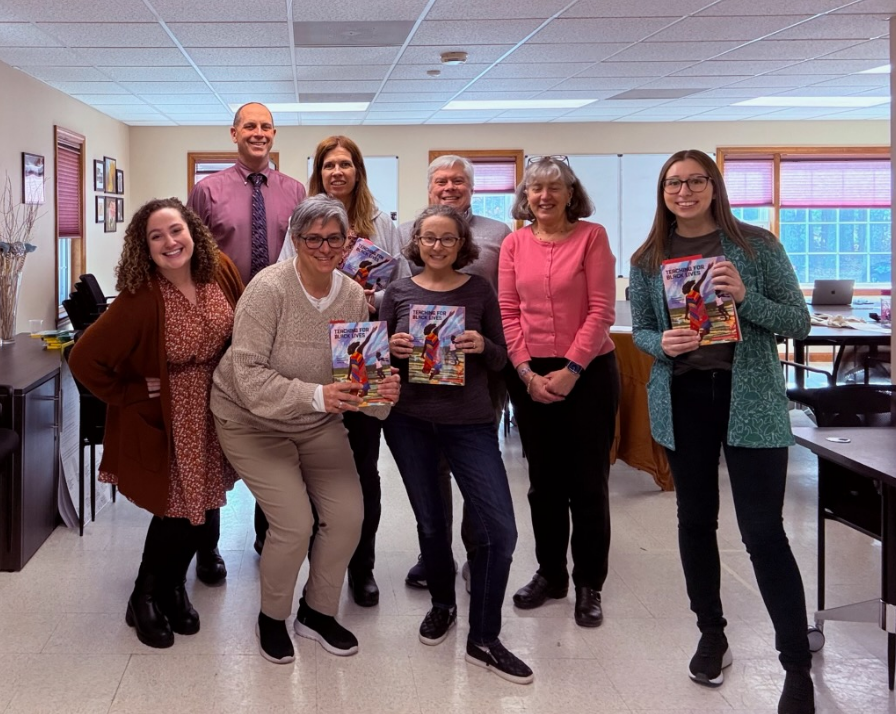
Carver School District study group members

Durham, North Carolina

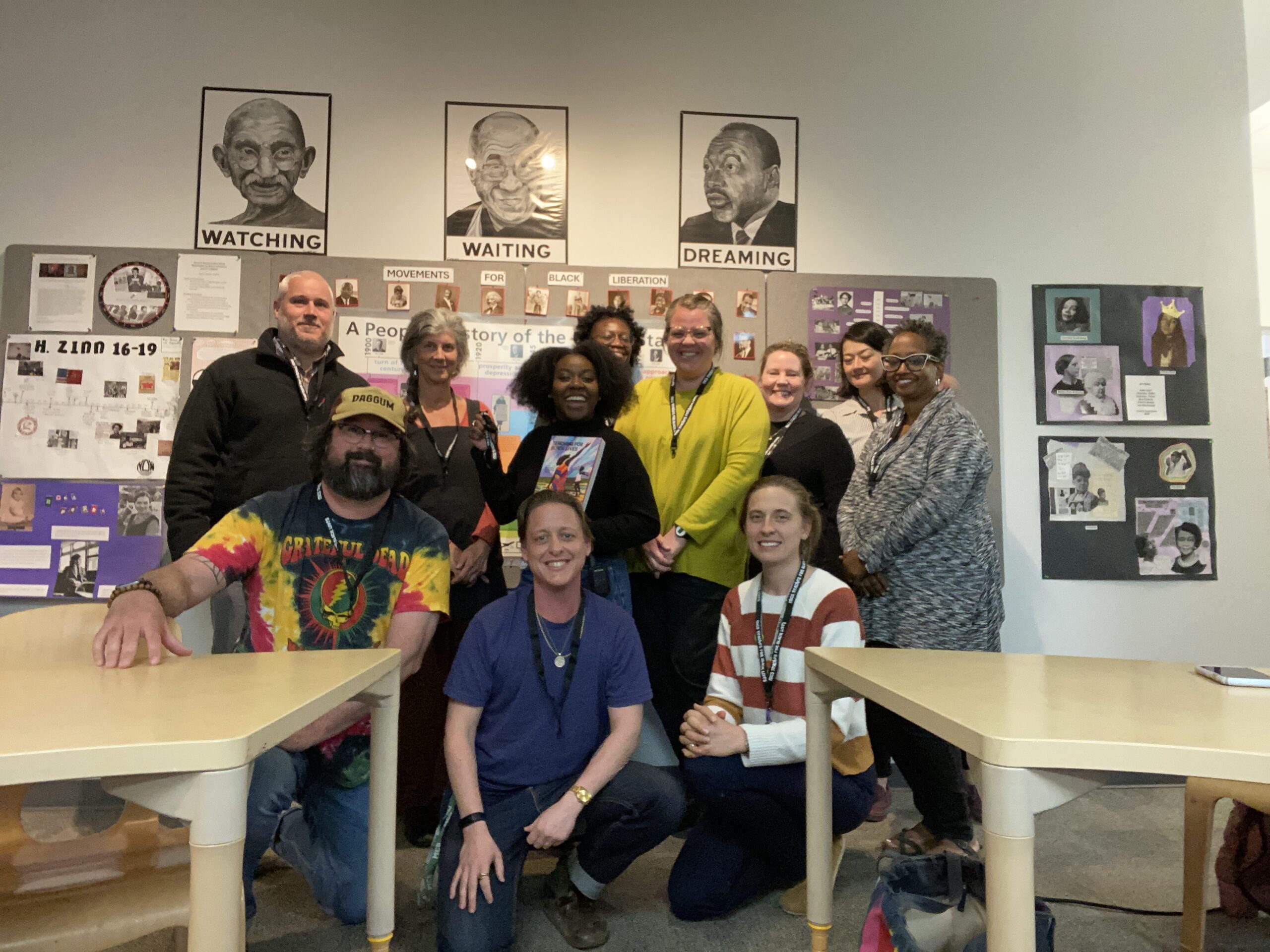
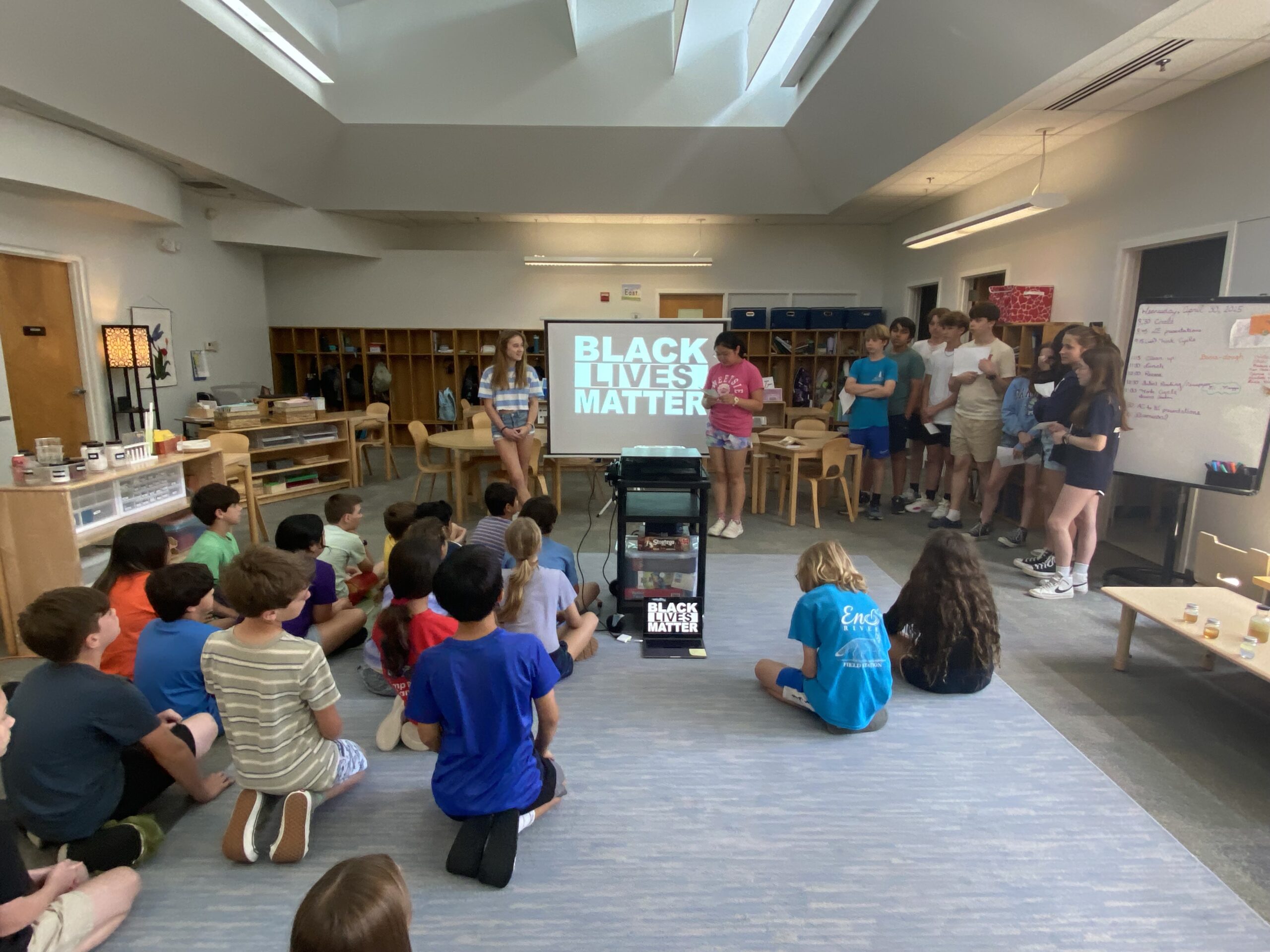
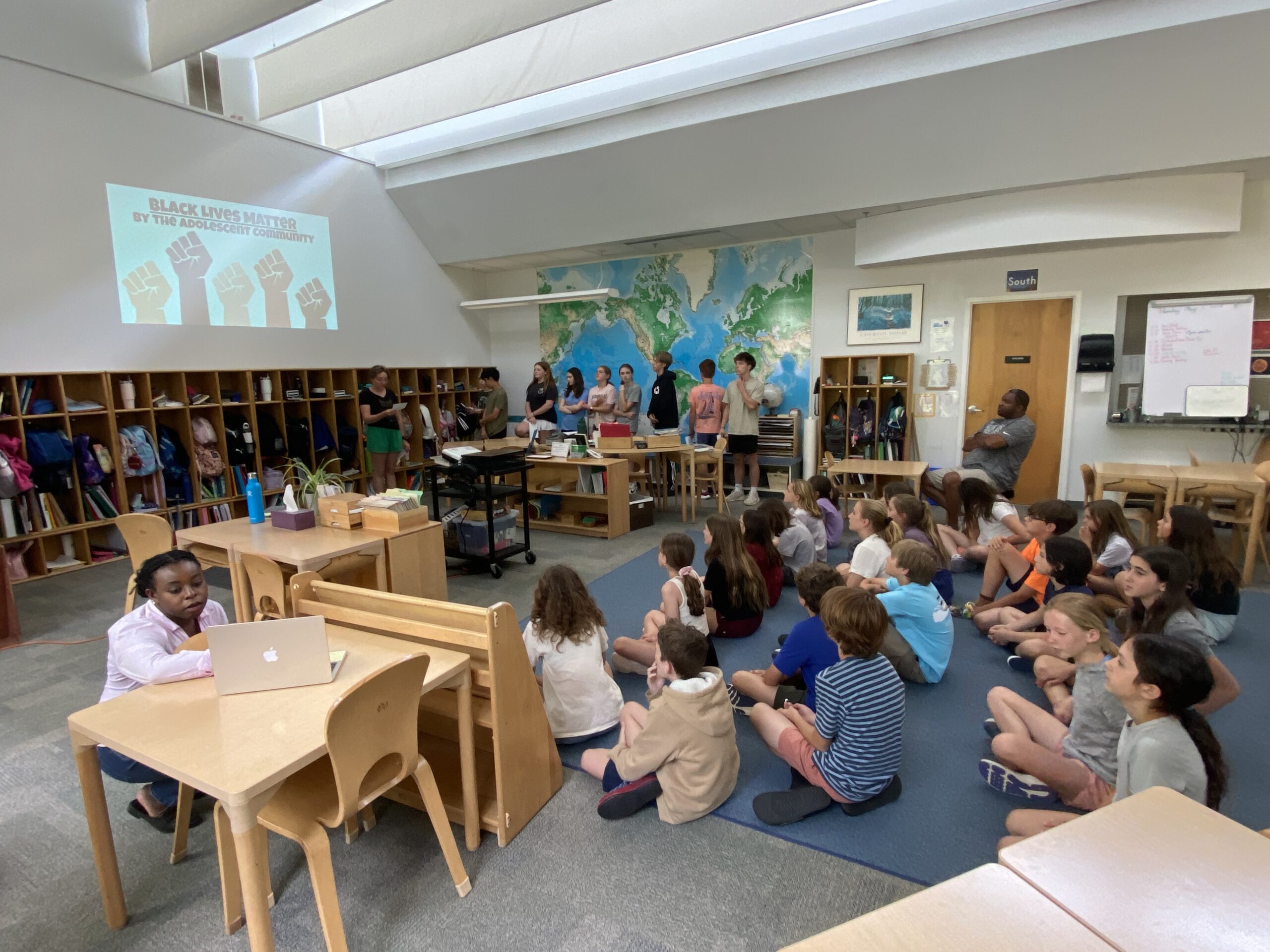
Fifteen educators from Montessori Community School (pre-K–8th grade) met monthly during their schools’ professional development time. In May 2025, they hosted a Teaching for Black Lives Week of Action. Jayes Sebastian, social studies teacher and group coordinator, reported,

At the toddler and 3–6 age classrooms, members of our administration read books about Black joy and identity to the young students. At the 1st-3rd grade level, our 4–6th grade students presented their projects on Black inventors, scientists, and historical figures. At the older levels, our 7–8th grade students presented on the Black Lives Matter movement, including Black Lives Matter at Schools, to the 4–6th grade classrooms.

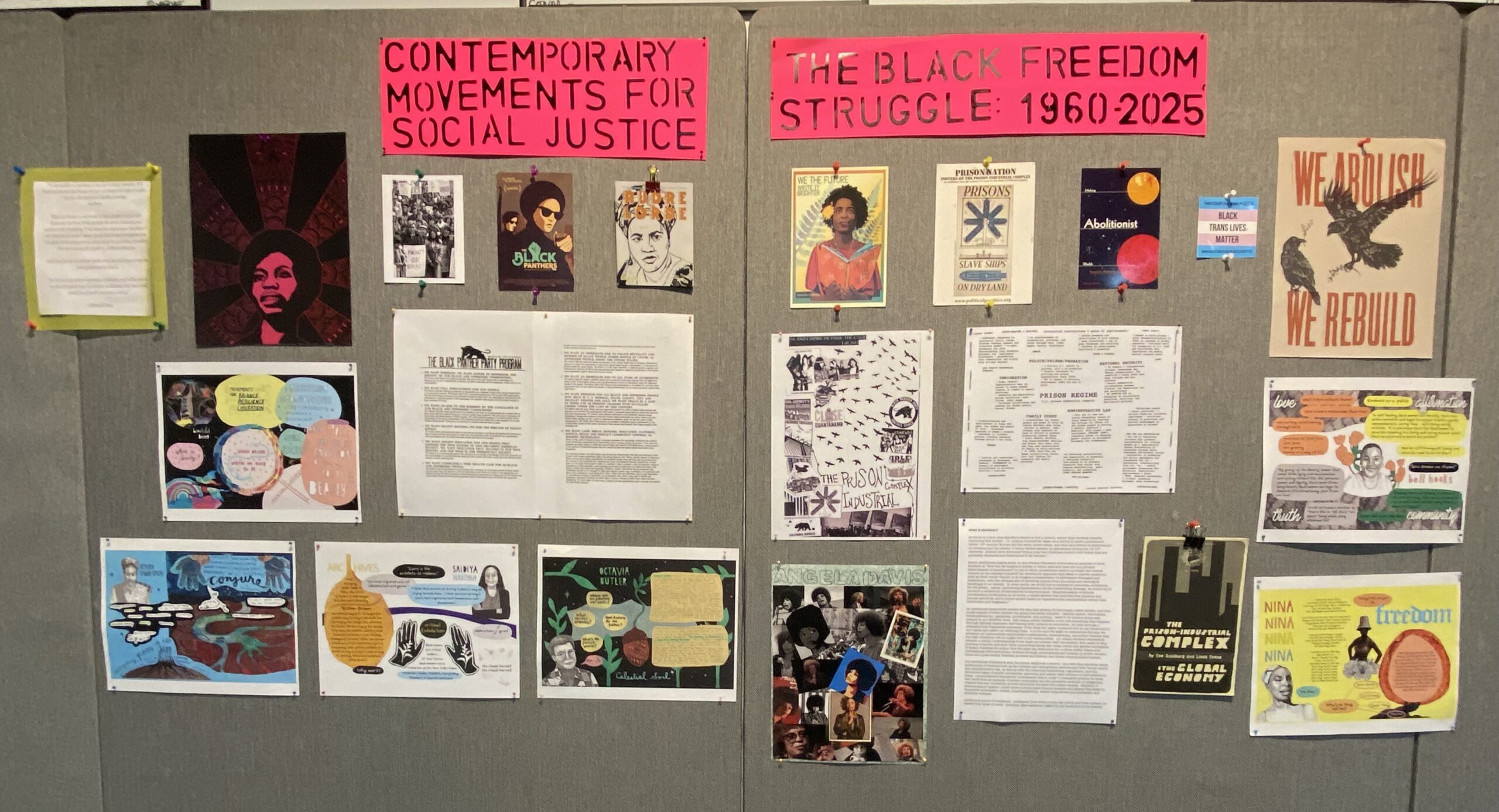
In my 7/8th grade Humanities classroom, over the course of the year, I taught the historical context of anti-Black racism, starting with enslavement and the Civil War and abolitionist movement, where I adapted “Poetry of Defiance: How the Enslaved Resisted.” In our unit studying the Black Panther Party, students also participated in the mixer lesson “What We Don’t Learn About the Black Panther Party — but Should.” I also taught on the Black Lives Matter movement and the prison abolitionist movement as examples of contemporary abolition.

Columbus, Ohio

Fourteen educators from Columbus and surrounding districts met in monthly in-person and/or virtual study group meetings. Annie Weiler, study group co-coordinator, said,

Rethinking Schools completely shifted my pedagogy as an educator when I was first introduced to it during my first year teaching. It literally changed my life and made me a much better teacher and person. This program has also allowed me to find a community of teachers that I’ve been searching for since my first year teaching here!

Sonja DeGenova, elementary teacher and group member, said,

The study group helped me understand that anti-racist teaching isn’t a one-time lesson — it’s a daily, ongoing commitment.

Columbus Study Group Members

San Juan, Puerto Rico

For the second year, nine teacher educators from a university in Puerto Rico met monthly. Melinda Maxwell-Gibb, professor and member, said,

Our group celebrated authors and books written by Puerto Ricans of color, we participated in voicing support for Palestine, worked with local feminist professionals to assist incarcerated women, protested against ICE activity on the island, and more.

Members also organized a series of events for the 2024–2025 school year: 

  • “Mujer y País,” a panel discussion about women’s role in the transformation of Puerto Rico. The all women panel — a community leader, a public health worker, a microbiologist, and a syndicate leader and professor — discussed how women have been in charge of defining the island’s future and have fought against discrimination and marginalization.
  • Kmaishibai stories by confined people (inmates), an activity aligned to the Teaching for Black Lives Section 4: “Discipline, The Schools-to-Prison Pipeline, and Mass Incarceration.” Event attendees learned about the power of education in rehabilitation and the life stories of the presenters. Margarita Marichal, group coordinator, said, “This activity was fruitful as students empathized and comprehended that some confined people were victims of a twisted system that abandoned them early on in their lives. All the stories written and illustrated were about their childhood memories.”
  • “Saturdays for Families,” cultural and educational activities at the university library to meet and integrate the marginalized families and community near campus. 
  • Inauguration of “Alacena Solidaria,” a place where students can grab something to eat and necessary hygiene products. Marichal said, “All our efforts have been towards the functioning of the Alacena because we have students who have scarce resources and are having difficult times.”
  • Annual celebration of Pura Belpré,  librarian, storyteller, folklorist, and puppeteer, with an activity in the university library in February.
  • Teach Truth Day of Action in Rincón where citizens are fighting for the conservation of public beaches that are being threatened by private investors and their projects.

Orem, Utah

Four teacher educators from Utah Valley University met eight times throughout the academic year in-person with a virtual option. Laurel Dias, group coordinator and secondary education professor, said,

I’m really glad I did it! I wasn’t sure what exactly I was getting myself into at the beginning but I gained so much from my experience. It was wonderful to connect with my colleagues in our study group AND I was amazed by the amount of resources, webinars, and other national connections I gained by being a coordinator. Even though our study group was small, I am inspired by other study group members I got to meet and have high hopes for growing ours in future years!

Orem Study Group Members

Testimonials

The Zinn Education Project received feedback from more than 200 study group participants from the 2024–2025 Teaching for Black Lives cohort. In the end-of-year survey, more than 85 percent of participants said the study group deepened their understanding of how to incorporate anti-racism into their curriculum and/or practices; 84 percent said the study group help them continue to do anti-racist teaching despite anti-history legislation designed to limit discussions of structural racism; and 87 percent said the study group provided a community to help sustain them during one of the toughest periods for educators.

Read comments and reflections from study group participants.

If you are feeling hopeless about the state of censorship and politics in this country, this group gives you tangible actions and supportive spaces to teach truth to the next generation. — Jenna Arnold, high school social studies teacher, Gresham, Oregon

My practice has deepened because I’ve been able to take and adapt the strategies of my fellow study group members. They have given me new content to teach, strategies to use, and resources to dig into to better my teaching and myself. — Caleigh Rockwal, high school history teacher, Providence, Rhode Island

I have put more thought into what and how I teach and questioning if the provided curriculum was the way to go, especially working towards transformative assessments. — middle school history teacher, Des Moines, Iowa

If you are feeling the anxiety of today’s political climate and want to be a part of change and resistance, join this educator force! The book study will empower and expand your community of change-makers! I was able to collaborate and create unit plans and lesson plans for this school year. I felt I could help my students feel seen and learn the pride in their identity and history. — Chrissy Simonsen, elementary teacher, Gresham, Oregon

Beyond deepening my understanding of Black history, I developed valuable leadership skills and strategies for meaningful community engagement. I’m truly grateful for the opportunity and for the ongoing training sessions that supported my growth throughout the year. — Felisa Alberts, elementary teacher, Mesa, Arizona

This experience gave me a different perspective on students. We often shared our struggles and wins in the classroom with Teaching for Black Lives as a way of analyzing them. This is worthwhile. — Elizabeth Cooke, elementary teacher, Oakland, California

In this environment, our study group has become a safe haven — a space where we can openly strategize about navigating new legal boundaries and still bring honest, meaningful content into our classrooms. — high school social studies teacher, Salt Lake City, Utah

I truly needed this group after the election. I was devastated and this community reminded me that I was not alone. It showed and shared new avenues of resistance and how much power there is in community. — Cora Long, special education elementary teacher, San Diego, California

It has helped me see how each unit, relationship, interaction, is an opportunity to change the narrative and empower voices. — elementary teacher, Portland, Maine

I’m not sure I would have felt empowered to add a Black Lives Matter in School science lesson to my curriculum if I hadn’t been in the study group. — Hayden Payne, middle school science teacher, Gresham, Oregon

I learned and unlearned so much about the United States history from this study group. For example, I had heard of Bayard Rustin, but had no idea how influential he is to our country’s history. This book study also helped to adjust my lens and the way I look at curriculum and things that are being taught or the things that are being left out. — Haileigh Mejia, middle school teacher, Des Moines, Iowa

The biggest benefit was discussing how the elements and issues discussed in the book present at different grade levels. My first graders respond differently to trauma (based on race and other issues) than high school students; all student responses are important to understand. — Melissa Siegel, retired teacher and substitute, Las Vegas, Nevada

The study helped me to think about and incorporate intentional practices into my counseling lessons for the entire school. It allowed me to introduce more topics to students they may or may not have been exposed to otherwise. — elementary counselor, Lawrence, Kansas

In a time of mass confusion and oppression, this community sustained us to be resilient and overcome the harm happening in our community and children’s lives. — Paulette Smith, elementary principal, San Leandro, California